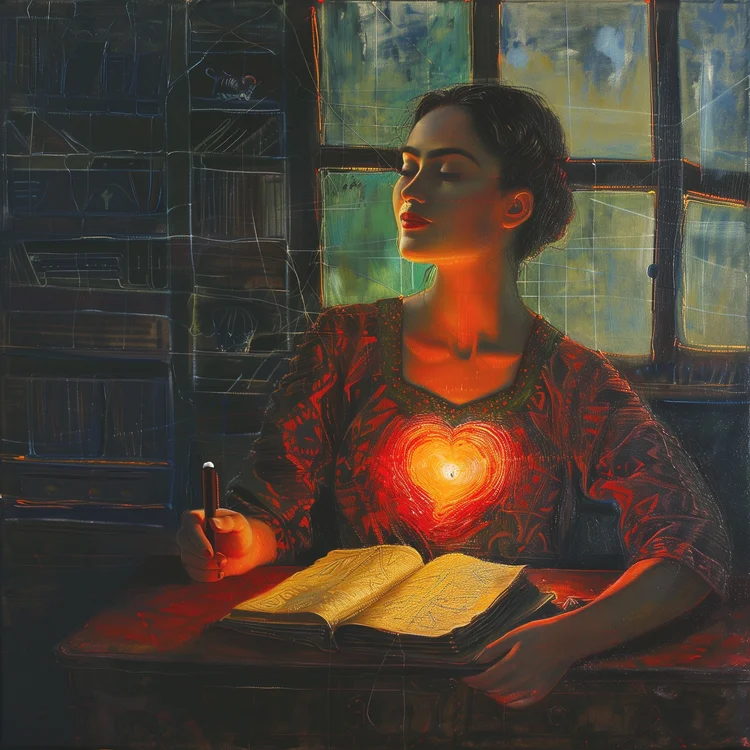
Discerning the Dream MeaningWe start with Jung’s premise that a dream is a message from the psyche which does not conceal; it reveals. Often that revelation is clothed in enigma – riddles, symbols, double entendres, and good humor – making dreams some of the most creative output of the subconscious mind! The wedding feastA wedding constellates the archetype of sacred union. In Jung’s alchemical language this is the coniunctio, the inner marriage that furthers individuation. A feast represents community and nurture. The scene says ‘something in you is ready to be joined and embodied.’ The dream does not show the marriage ceremony – we see only the bride – but the feast and food is the focus. Something wants to be “eaten,” not kept as an idea. The peninsula between the “blue, blue sea,” with two bridges to “beyond the horizon”Water is a classic image of the unconscious. The peninsula places the ego on a liminal threshold between the known and the deep unknown. Two bridges lead out in opposite directions. Bridges often function as transitional images that connect psychic domains. The horizon says the destination is not yet in view. The overall picture suggests the dreamer is poised to cross into a new phase, and that there are at least two viable ways to do it. The old Roman building at the center, with picturesque lampsRoman evokes law, order, classical form, the senex principle. “Museum-like” suggests the heritage of culture and the stored memory of ancestors. Lamps signal illumination that is steady and traditional. Set at the center, this structure looks like a stabilizing axis that can host the wedding. But it can also hint at over-identification with old forms if it becomes a museum rather than a living temple. So the question becomes, ‘What are the “old forms” I need to honor. What are the “museum pieces” I must let go?’ “My wedding garment” and the long brown beaded seed earringsGarments belong to the persona in Jung’s model of the psyche. The persona is a necessary social “mask,” a role that helps us meet the world. Adjusting the wedding garment suggests changing the outer role that will let an inner union be lived. Earrings highlight the ears - listening and receptivity. Because they are seed beads and brown, the image leans earthy and generative; patient listening and grounding, rather than glitter or display. The psyche puts the emphasis on right attire and right listening so that this union can be carried into the world with integrity. The regal, motherly woman bearing heaping plattersThis is a vivid appearance of the Great Mother in her benevolent, nourishing aspect. She is royal and maternal at once. In Neumann’s classic study, the Great Mother holds both nourishing and demanding poles, and her presence often accompanies thresholds of growth. Here she feeds the entire gathering, which suggests there is enough energy to support the change that is underway. The dreamer is already assisting the distribution, showing the ego’s willingness to accept the change. “Snail and kangaroo sauce,” brightly coloredCurious details, such as this bizarrely named condiment, are often the most critical to explore, since they represent not the collective archetype, but the purely personal. In Jungian work food often equals what the psyche is asking us to take in, to swallow, to digest. Unusual dishes can mark new or disowned energies that want to be returned to the embodied self. The Snail image was familiar to me, the dreamer, as a theme in medieval illuminated manuscripts – one of the hobbies I’ve kept since high school when I began my study of calligraphy. The lowly snail is often depicted there as a valiant warrior complete with lance and shield, inching into battle with knights on horseback! The snail’s spiraling inwardness is thus paired with an unexpected courageous outwardness, and the willingness to defend itself against superior forces. The Kangaroo is noted for its strong, leaping legs, and the pouch that carries its young wherever it goes. Set together in one “sauce,” the image joins slow, inward life with leaping, far-reaching vitality and protective caretaking. Bright flesh signals aliveness and appetitive color. The question becomes ‘Can the dreamer dance to both tempos? Blending the snail’s contemplative and defensive pace with outward leaping and still honor the caretaking function?’ The sleeping bear by the bride’s chairA bear symbolizes potent instinct, enormous strength, seasonal wisdom, and in many traditions a maternal protector. Curled around the bride’s chair, it guards the place of union; sleeping, not gone. It is present and quiescent, which is an image of power at rest. The dreamer’s cautious movement around it shows proper respect for a force that can be dangerous if roused at the wrong time or in the wrong way. The psyche is saying, ‘The union you seek is protected by raw, instinctive life. Approach with reverence. Befriend the bear but do not poke it!’ Context of the DreamGiven all of this it should not be a surprise that this dream came to me just as I was accepting the realization that my first marriage was over, and that I needed to re-unite with my own abandoned energies, fight for my sovereignty, and cross the bridge away from the old Roman structures of traditional marriage and motherhood. The whole dream reads like a green light for a passage that requires patience, courage, and relationship to instinct.
|